
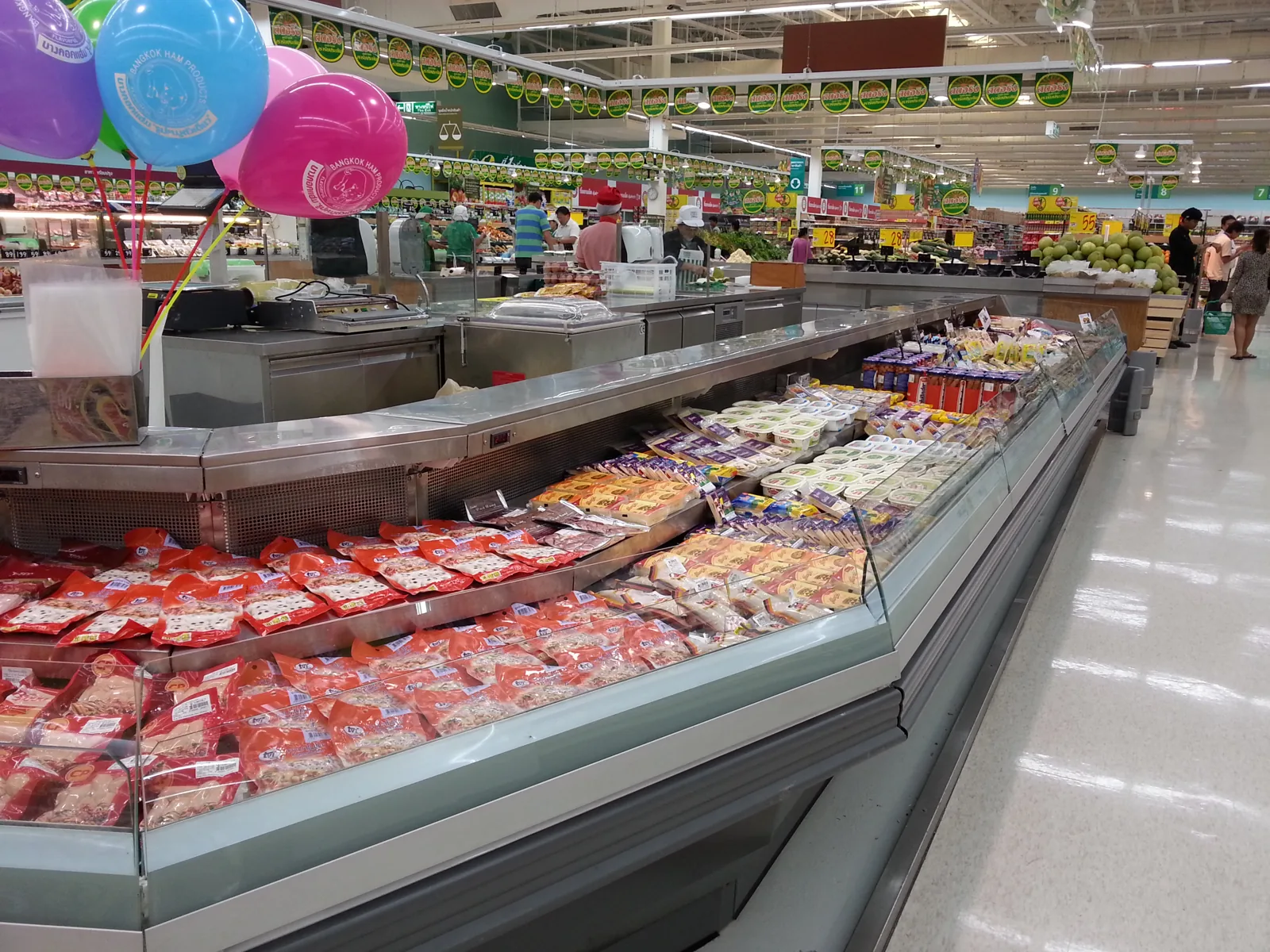
For supermarkets, convenience stores, restaurants and foodservice operators, refrigeration is a working asset. Its design affects energy consumption, merchandising, workflow and the condition of products throughout the day.
Start with the real operating environment
Cabinet selection should consider ambient temperature, door-opening frequency, required storage volume, product loading pattern and available electrical supply. Equipment intended for a hot climate or high-traffic store should be specified differently from a cabinet used in a controlled indoor environment.
Key factors to compare
- Stable temperature performance under expected loading conditions
- Insulation, glass and door construction suited to the application
- Accessible refrigeration components for maintenance
- Cabinet dimensions that support the customer’s workflow
- Branding, lighting and shelving that improve merchandising
Made in Thailand for regional and export markets
Thai manufacturing offers a practical balance of production flexibility, communication and customization. Standard platforms can be adapted for voltage, branding, dimensions, shelving and project-specific operating requirements.
Choose lifecycle value, not only purchase price
The best-value cabinet is one that performs consistently, can be maintained efficiently and fits the business process. Product quality, after-sales access, spare parts and proper specification should be evaluated together.